Our carbon footprint in 2024 was 209.08 t CO₂e, which is roughly equivalent to the annual carbon footprint of 22 average Finns. The calculation was carried out in accordance with the GHG Protocol methodology and covers only Scope 1 and Scope 2 emissions. Our emissions consist entirely of direct greenhouse gas emissions (Scope 1), such as fuel used by vehicles and on-site heat production.
In 2023, our carbon footprint was 220.70 t CO₂e, meaning our emissions decreased by 5% last year. The main contributing factor was a change in turnover. Our largest source of emissions is vehicle fuel consumption (77.81%), which largely follows the development of business activity. Diesel consumption decreased by 4.9%. We continue to explore the potential of renewable diesel and electric vehicles, but cost considerations and limitations in charging infrastructure currently prevent wider adoption. However, all future purchases of smaller machinery and equipment will be electric.
Having our own transport fleet is an important competitive advantage for Mirror Line, which is why outsourcing transportation is not an option for us. Through efficient route planning and load optimisation, we ensure a high utilisation rate for our vehicles. Operating our own transport fleet also allows goods to be delivered unpackaged rather than on pallets, enabling the available vehicle space to be used as efficiently as possible. Our transport fleet is renewed regularly, typically on an annual basis. As our turnover grows, it is likely that diesel consumption will not increase at the same rate, as deliveries can be consolidated into fuller and more efficiently optimised loads.
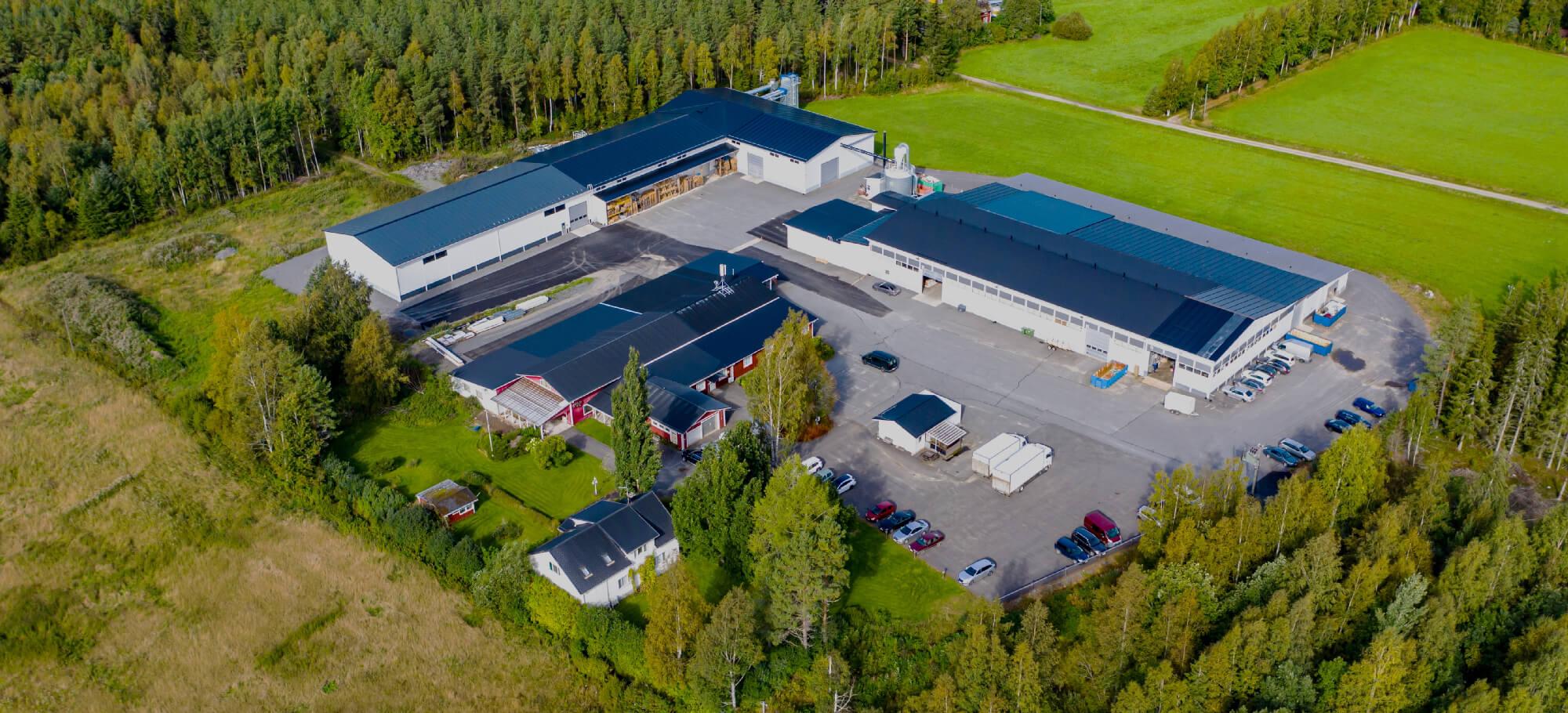
Our second largest source of emissions is the particle board used for heat production at our factory (approx. 18.8%). Replacing particle board with wood chips would reduce emissions, but the particle board is a by-product of our production process that would otherwise need to be disposed of through other means. Using our own production by-products for heat generation is currently the most efficient solution, as alternative uses for this material are very limited. Additional emissions would also arise from transporting replacement wood chips to the factory, as well as from processing and transporting discarded particle board material.